Headlines about defence budgets tend to be about dollars. But a huge economy can post a huge military budget without it being much of a national priority, while a small one can devote a large share of everything it produces. To understand who is really arming, you need both numbers: the total, and the share of GDP.
The total: $2.9 trillion and rising
According to the Stockholm International Peace Research Institute (SIPRI), world military expenditure reached $2,887 billion in 2025, up 2.9% in real terms on 2024. That is the 11th consecutive year of growth, and spending is up 41% over the decade from 2016 to 2025.
Measured against the size of the global economy, the "military burden" reached 2.5% of world GDP — the highest level since 2009.
The big three
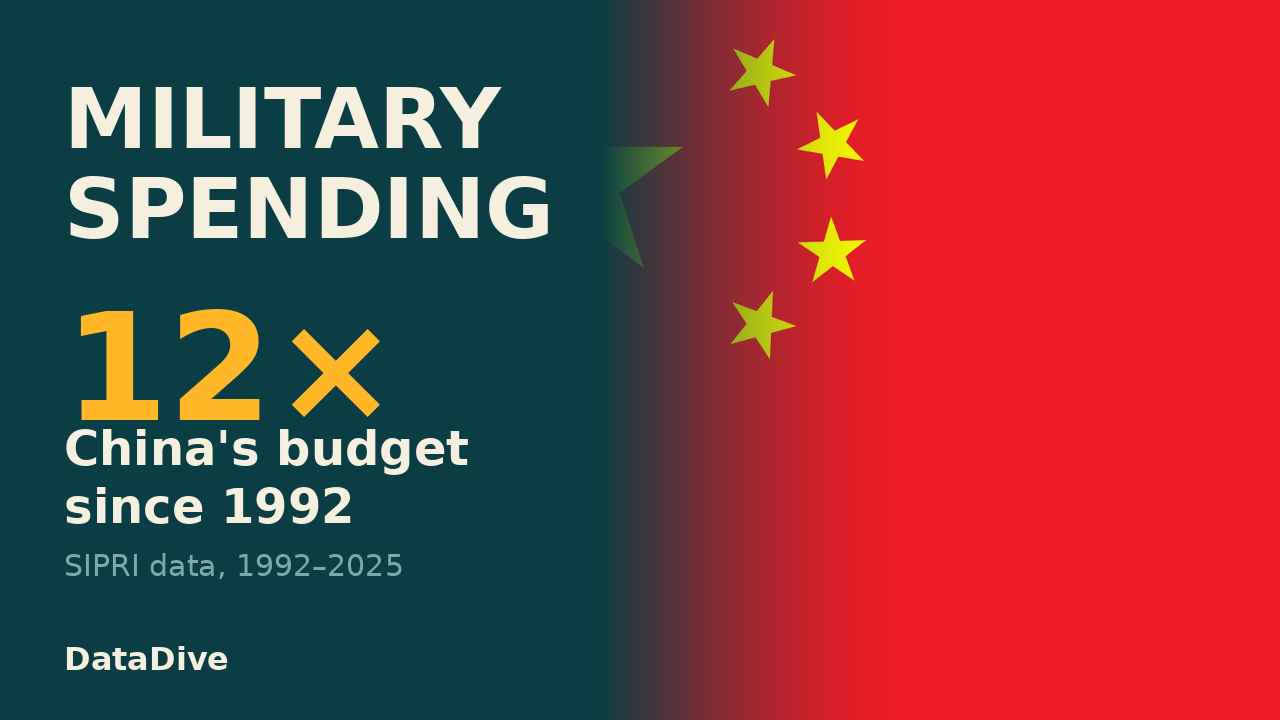
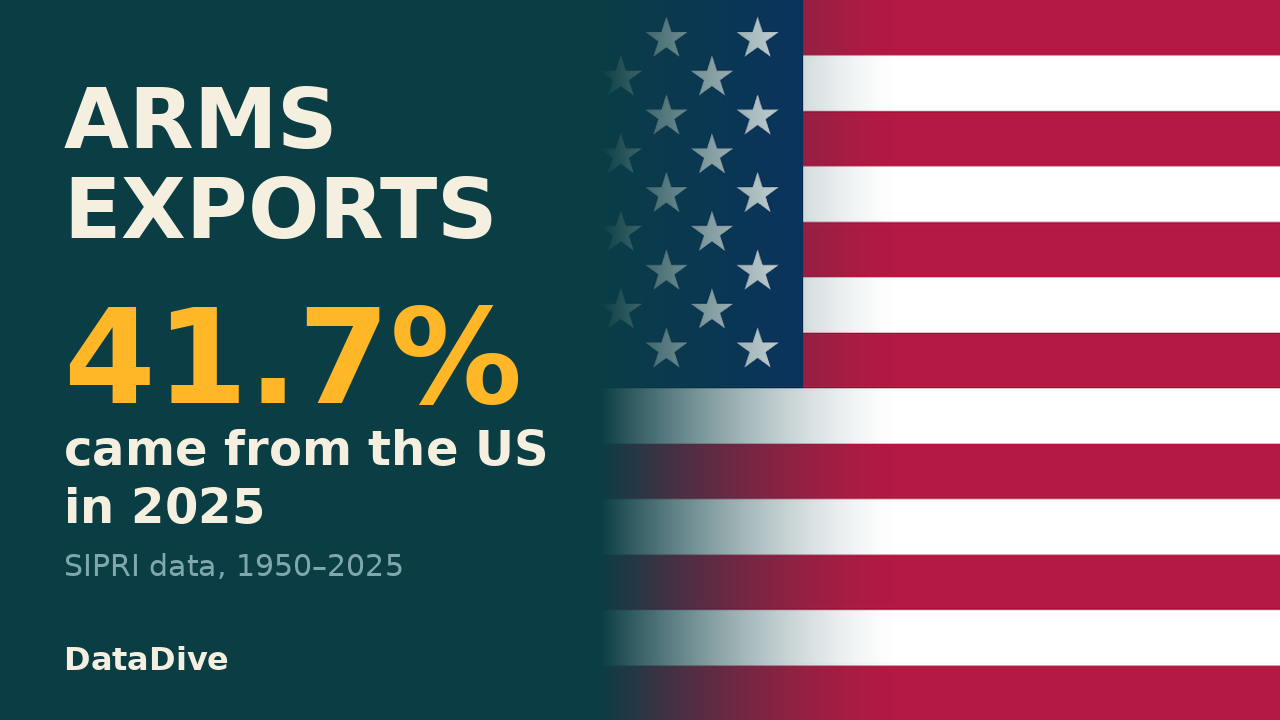
Three countries account for more than half the total. The United States spent $954 billion, China $336 billion and Russia $190 billion — together $1,480 billion, or 51% of the world's military spending.
But the direction of travel is not the same. Spending in the United States fell by 7.5% in 2025, while it rose sharply elsewhere: Europe up 14%, Asia and Oceania up 8.1%, Africa up 8.5%. The Middle East barely moved (+0.1%).
Europe rearms
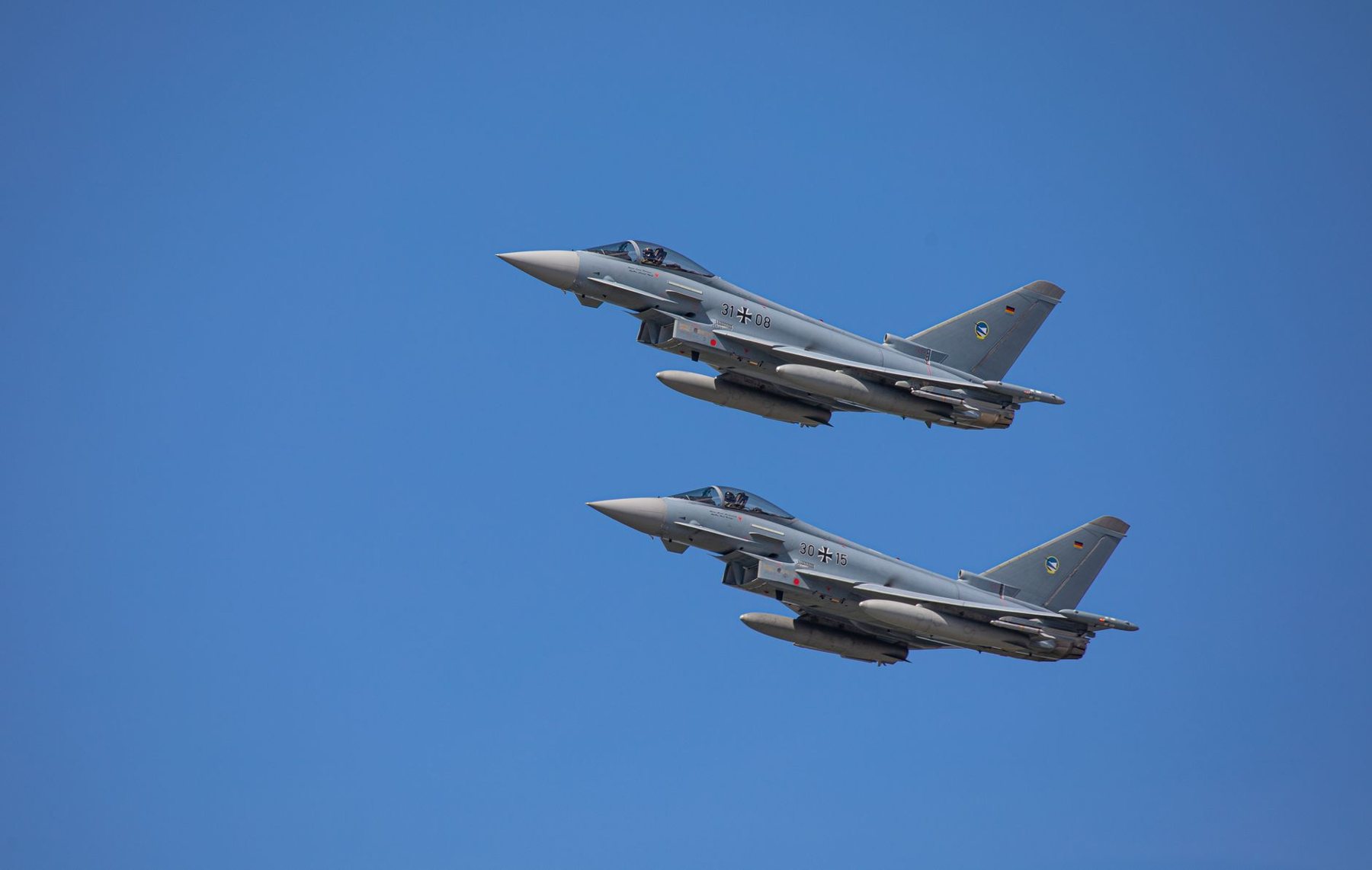
The most striking shift is in Europe. Germany's spending rose 24% to $114 billion, or 2.3% of its GDP. The 29 NATO members covered in SIPRI's figures spent about $559 billion combined, and 22 of them exceeded the alliance's 2% of GDP guideline. In Asia, Japan spent $62.2 billion (+9.7%, 1.4% of GDP) and Taiwan $18.2 billion (+14%, 2.1% of GDP).
Big budget vs. big burden
This is where GDP changes the story. Some countries spend enormous sums, but as a share of a much larger economy the burden is modest — Germany at 2.3% is an example. Others devote a far larger share:
- Ukraine: $84.1 billion (+20%), equal to about 40% of its GDP.
- Russia: $190 billion (+5.9%), or 7.5% of GDP.
The comparison is not between good and bad. It is between two very different questions. "Who has the biggest army?" is answered by dollars. "Who is prioritising defence hardest, relative to what it has?" is answered by the share of GDP — and gives a very different ranking, with countries in or near conflict at the top.
What is driving it
SIPRI's researchers described governments responding to "another year of wars, uncertainty and geopolitical upheaval with large-scale armament drives." The main drivers are the war in Ukraine, tension across Asia, a Middle East in conflict, and — in Europe — a decision by many governments to spend more of their own money on defence.
Why it matters beyond the headlines
Every dollar of military spending is a dollar not spent elsewhere, and rising defence budgets in aging, indebted economies will squeeze health, pensions, education and infrastructure. That trade-off is why the share of GDP matters more than the total: it shows how much of a country's economy is being pointed at security, and how quickly that share is changing.
After more than a decade of increases, the question is no longer whether spending is rising. It is whether it can keep rising — and what gives way when it does.